
'Rahul inspired Indian industry with an ethos, an ethos of being more confident, more independent, more thorough, more competitive, more generous, more public-spirited, and more national and more international all at once,' remembers Naushad Forbes.

'Such big falls are quite frequent these days, so do not try to time this market.' 'Use big dips to accumulate quality stocks.'

The survey also shows a majority in favour of ousted leader Boris Johnson, with 55 per cent saying that Tory MPs were wrong to effectively force him to resign and 40 per cent saying they were right.

'India-China economic ties are likely to take a hit in the wake of the new situation, but that also provides India with a new opportunity to strengthen its manufacturing base,' points out Dr Rajaram Panda.
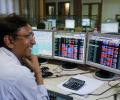
Equity indices overcame a wobbly start to clock gains for the third session on the trot on Tuesday, propped up by banking, metal and energy stocks amid a mixed trend in global markets. A recovery in the rupee also bolstered sentiment, traders said. The 30-share BSE Sensex advanced 246.47 points or 0.45 per cent to settle at 54,767.62 after starting the trade on a weak note. In a volatile session, the benchmark hit a high of 54,817.52 and a low of 54,232.82 during the day.

The IMF on Tuesday projected an impressive 12.5 per cent growth rate for India in 2021, stronger than that of China, the only major economy to have a positive growth rate last year during the COVID-19 pandemic. The Washington-based global financial institution, in its annual World Economic Outlook ahead of the annual Spring meeting with the World Bank, said the Indian economy is expected to grow by 6.9 per cent in 2022. Notably in 2020, India's economy contracted by a record eight per cent, the International Monetary Fund (IMF) said as it projected an impressive 12.5 per cent growth rate for the country in 2021.

'Both Russia and the USA seek New Delhi's friendship, because for both -- Russia and the USA -- India is a certain counterbalance to China.'
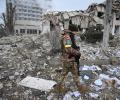
Reconstruction efforts after the Russia-Ukraine war will be dominated by the heft of the membership of major nations across international organisations. India is hamstrung because it does not play host to any major global institution nor does it hold positions of significant influence in the ones in which it has membership. As a result, the world's sixth largest economy is obliged to follow the rules set by most of them.

Asked why the United States was targeting Putin's daughters, a senior Biden administration official said the US thought they could be in control of some of their father's assets.

General Pande said the northern border region has been peaceful and steps have been taken to maintain peace through established protocol and existing mechanism.
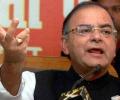
Finance Minister Arun Jaitley has said that the states were free to announce farm loan waivers if they had the fiscal space and that there would be no shortfall this year in divestment and non-tax revenues.
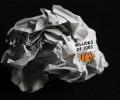
'The government is sincerely working on employment generation. Unfortunately, they are depending on these people from Harvard. Their wrong policies are killing jobs. The government has to come out of the Western framework on which they depend upon a lot.'
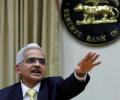
The MPC headed by RBI Governor Shaktikanta Das will announce the resolution of the meeting at around noon on Thursday.
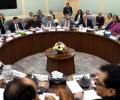
India's likely medium-term potential growth will almost certainly be markedly lower than that experienced in pre-pandemic years, warns Shankar Acharya, former chief economic advisor to the Government of India.
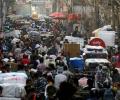
India's macroeconomic situation is certainly better than what it was a year ago, eminent economist Pinaki Chakraborty said on Monday, while expressing hope that the country will be back on the path of economic growth if there is no major third wave of the COVID-19 pandemic. In an interview with PTI, Chakraborty, who is the director of the National Institute of Public Finance and Policy (NIPFP), said that inflation may remain at an elevated level as there was a significant fiscal and monetary expansion in the last 18 months. "The current macroeconomic situation is certainly much better than what it was one year back. We are seeing recovery in most sectors," he said. Chakraborty noted that COVID-19 vaccination has been going on at a very fast rate in India.

India has helped the world discover the true potential of democracy and the keyword for the country today is compassion for the downtrodden, needy and those on the margins, President Droupadi Murmu said on Sunday.

Colombo seems to be veering to the middle path between China and the US on global matters, but in regional matters of strategic security, it is increasingly identifying with India, points out N Sathiya Moorthy.

The department of investment and public asset management (Dipam) can also seek in-principle approval from the Cabinet Committee on Economic Affairs (CCEA) for strategic divestment of PSUs on a case-to-case basis considering investor appetite and sectoral trends.

We have our own problems for sure and they are not trivial, but for now, our economy is in not too bad a shape, our politics is as personality-driven and authoritarian as that of most countries in the world. We must make the best of what we have and not be excessively unhappy looking at the grass on the other side of the septic tank which may not be greener after all!, observes Shreekant Sambrani.
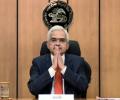
'Even if there is a third wave or a fourth wave, it is hard to see the economy will suffer like that (during the first wave).'

Rajiv Kumar will continue as vice-chairman of the body, along with other full-time members V K Saraswat, Ramesh Chand and V K Paul.
While foreign currency rating was retained at Baa2 -- the second-lowest investment grade score -- Moody's also projected a fiscal deficit of 3.7 per cent of gross domestic product in the year through March 2020, a breach of the government's target of 3.3 per cent.

Since 2000-01, the Indian economy has shown the tendency of being unable to absorb all domestic savings as investments.

The Ambedkar-Periyar Study Circle explains their side of the story which saw the IIT-Madras student body being de-recognized for violation of code of conduct and misuse of privileges.
S&P Global Ratings on Wednesday said Indian banks face a systemic risk as the second COVID wave will impair the performance of financial institutions in the April-September period. Stating that economic recovery remains highly vulnerable to setbacks due to COVID, particularly if fresh outbreaks trigger new lockdowns, S&P said the banking sector's weak loans will likely remain elevated at 11-12 per cent of gross loans in the next 12 to 18 months. "The second wave has front-ended weakness in asset quality," said S&P Global Ratings Credit Analyst Deepali Seth Chhabria. "Financial institutions face a strained first half amid weak collections and poor disbursements."

'Overtightening of monetary policy by central banks and the spread of new Covid variants, which may force governments to restart lockdowns or restrict mobility.'

India has adopted a bilateral strategies with its immediate neighbouring countries for mutual benefits


'The way discrimination against Muslims has become almost normalised is very upsetting.'

No country has grown without educating its people. India's shameful lag in primary and secondary education has persisted for several decades, and the crisis in higher education is now threatening a social and political calamity, says Ashoka Mody.
Modi govt must bring about reforms to kick-start big-ticket infra projects.
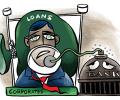
Given Indian corporates's high indebtedness, new credit will be used for servicing loans rather than building factories. This is setting us up for more companies on life support and more zombie banks, warns Rahul Jacob.
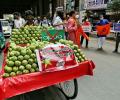
'We are not able to manufacture even low-end products as cheaply as China.' 'We are not buying Chinese goods today out of any love for China.'

The US Fed interest rate decision, domestic macroeconomic data announcements and ongoing quarterly earnings are some of the major factors that will drive the stock markets in a holiday-shortened week, analysts said. Besides, monthly auto sales numbers and the LIC IPO will also remain in focus, they added. Equity markets will remain closed on Tuesday for Id-Ul-Fitr (Ramzan Id). "The market is likely to kick off this week on a sombre note after a sharp fall in the US market then the focus will shift to the outcome of the US FOMC meeting, which is crucial amid record inflation and growth worries.

Accelerating inequality, the market dominance of tech platforms and remote working are likely to be the longest-lasting legacies of the COVID-19 crisis, the WEF said in a report on Monday. Releasing its Chief Economists Outlook report during the online Davos Agenda Summit, the WEF said that beyond managing the pandemic and vaccine rollout, these trends could shape a new era of fiscal, monetary, and competition policy. Deglobalisation is seen as the least likely of the current trends to continue in the longer term; particularly as international coordination is key to resolving global challenges such as vaccine manufacturing and distribution.

The Supreme Court had observed that issues of national economic interest; disclosure of information regarding currency or exchange rates/interest rates/ taxes; regulation or supervision of banking, insurance and other financial institutions; proposals for expenditure or borrowing, and foreign investments, could all, in some cases, harm the national economy, especially if released prematurely.
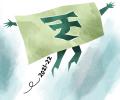
S&P Global Ratings on Thursday said the Indian economy is projected to grow at 11 per cent in the current fiscal, but flagged the "substantial" impact of broader lockdowns on the economy. In its report on Asia-Pacific Financial Institutions, S&P said the control of COVID-19 remains a key risk for the economy. New infections have spiked in recent weeks and the country is in the middle of a second pandemic wave.

Here's the full text of the maiden address to the nation by President Droupadi Murmu on the eve of Independence Day 2022.

Thousands of Inter University Students' Federation (IUSF) students were seen sloganeering outside the Prime Minister's Residence in Wijerama Mawatha.

Biden said the US will continue to escalate sanctions if Russia escalates.
 © 2026 Rediff.com - Advertise with us - Disclaimer - Privacy Policy - Sitemap - Feedback - About us - Terms of use - Grievances